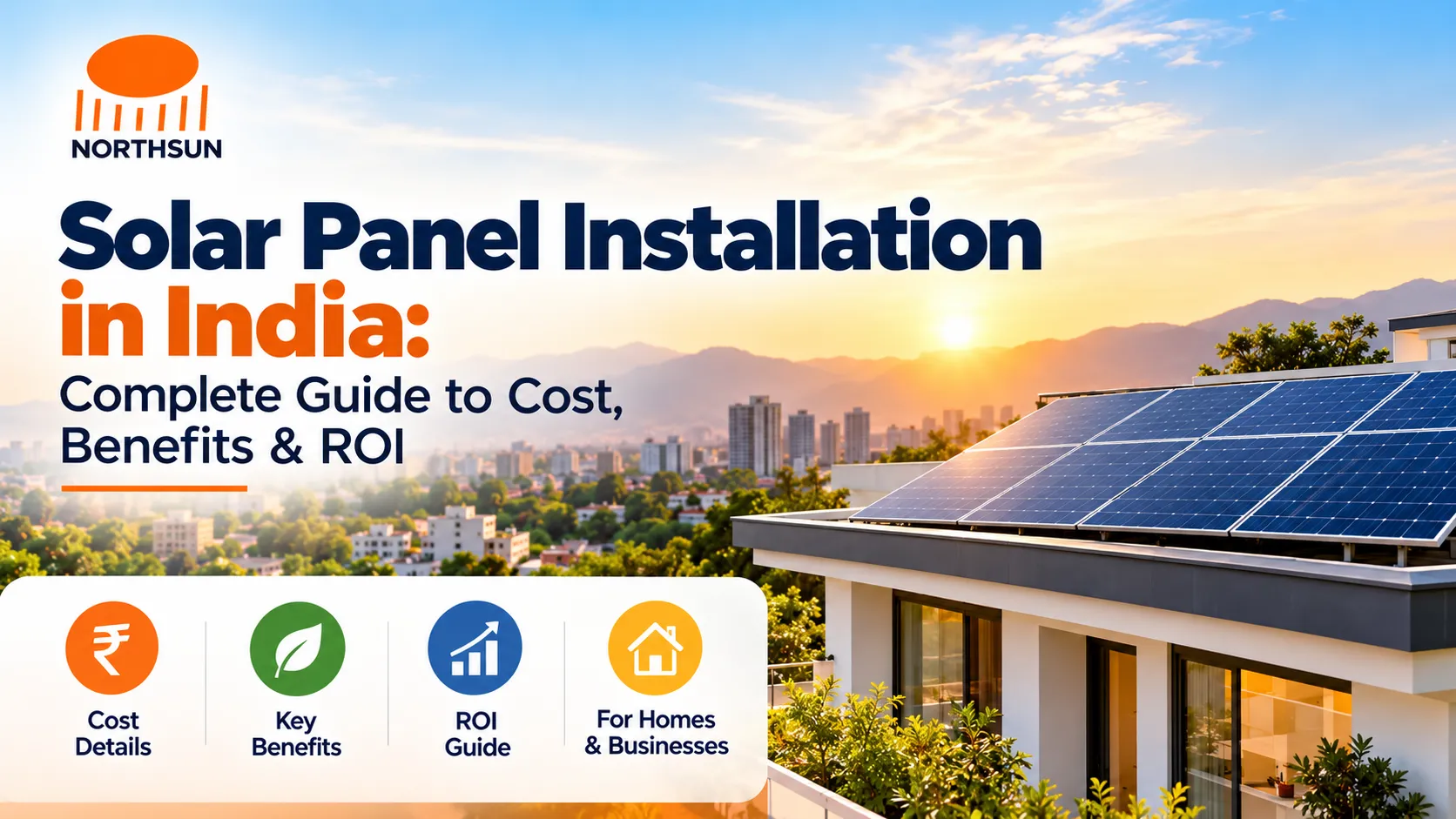
With rising electricity costs and increasing awareness of clean energy, solar power has become one of the most practical energy solutions for homes, businesses, industries, and agricultural applications in India. A properly designed solar power system can help reduce electricity expenses, improve energy independence, and make better use of available rooftop or open land.
Whether you are planning a rooftop solar system for your home, a commercial solar plant for your business, or a large ground-mounted solar project, understanding the installation process, system types, costs, benefits, and maintenance requirements is important before making an investment.
In this guide, we will explain everything you need to know about solar panel installation in India, including how solar systems work, the different types of solar systems, installation steps, factors affecting cost, government support, return on investment, and how to choose the right solar solution.
What Is Solar Panel Installation?
Solar panel installation is the process of designing and installing a solar photovoltaic (PV) system that converts sunlight into electricity.
A typical solar power system consists of:
- Solar panels
- Solar inverter
- Mounting structure
- DC and AC cables
- Protection devices
- Earthing system
- Monitoring system
- Battery storage, where required
- Net meter for applicable grid-connected systems
Solar panels capture sunlight and generate DC electricity. The inverter converts this DC electricity into AC electricity that can be used by household appliances, commercial equipment, or industrial machinery.
Depending on the system design, excess electricity can either be stored in batteries or exported to the electricity grid.
Why Is Solar Energy Becoming Popular in India?
India receives substantial sunlight across most regions of the country, making solar energy an attractive renewable-energy option.
Businesses and homeowners are increasingly considering solar because it can provide several long-term advantages.
1. Lower Electricity Bills
One of the biggest reasons for installing solar panels is to reduce dependence on grid electricity.
A properly sized rooftop solar system can generate a significant portion of a property’s electricity requirements, helping reduce monthly electricity expenses.
2. Renewable Source of Energy
Solar energy is generated from sunlight and does not require the burning of conventional fossil fuels during electricity generation.
This makes solar power an important part of India’s transition toward cleaner energy.
3. Long-Term Investment
A solar power system is generally viewed as a long-term infrastructure investment. Once installed, the system can continue generating electricity for many years with proper maintenance.
4. Suitable for Different Applications
Solar systems can be designed for:
- Residential buildings
- Offices
- Shops
- Hotels
- Schools
- Hospitals
- Factories
- Warehouses
- Agricultural applications
- Institutions
- Large commercial facilities
5. Greater Energy Independence
Generating electricity at the point of consumption can reduce dependence on conventional grid electricity and provide greater control over energy costs.
Types of Solar Power Systems
Before installing solar panels, it is important to select the right type of solar system according to your electricity consumption and requirements.
1. On-Grid Solar System
An on-grid solar system is connected to the electricity grid.
Solar panels generate electricity during the day, and the generated power can be used by the property. Depending on the applicable regulations and metering arrangement, surplus electricity may be exported to the grid.
Advantages of On-Grid Solar
- Lower electricity bills
- No battery required in a standard configuration
- Good option for properties with reliable grid supply
- Suitable for homes and commercial buildings
- Can make effective use of rooftop space
On-grid systems are particularly suitable when the primary objective is reducing electricity bills.
2. Off-Grid Solar System
An off-grid solar system operates independently of the electricity grid.
It generally uses batteries to store electricity generated by solar panels so that power can be used when sunlight is unavailable.
Advantages of Off-Grid Solar
- Independent of the electricity grid
- Battery backup available
- Useful in areas with unreliable or unavailable grid electricity
- Can support essential loads during power interruptions
An off-grid system requires careful battery sizing because storage capacity plays an important role in overall system performance.
3. Hybrid Solar System
A hybrid solar system combines solar panels, batteries, and grid connectivity.
The system can use solar power during the day, charge the batteries when appropriate, and use stored electricity when required.
Advantages of Hybrid Solar
- Solar generation
- Battery backup
- Grid connectivity
- Better energy management
- Suitable for users who want both bill savings and backup power
Hybrid systems can be useful for homes and businesses where power continuity is important.
4. Ground-Mounted Solar System
Ground-mounted solar systems are installed on suitable open land instead of a rooftop.
They can be designed for larger capacities and are commonly considered for commercial, industrial, institutional, agricultural, and utility-scale applications.
The available land, soil conditions, orientation, shading, electrical infrastructure, and project capacity all need to be evaluated before installation.
How Does a Solar Power System Work?
The working process of a solar PV system is relatively straightforward.
Step 1: Solar Panels Capture Sunlight
Solar panels receive sunlight and convert solar energy into DC electricity.
Step 2: Inverter Converts Electricity
The inverter converts DC electricity generated by the solar panels into AC electricity suitable for electrical loads.
Step 3: Electricity Is Used
The generated electricity can be directly consumed by appliances, equipment, machines, or other connected loads.
Step 4: Excess Energy
Depending on the system configuration, surplus electricity can be:
- Exported to the grid
- Stored in batteries
- Managed through an energy management system
Step 5: Monitoring
Modern solar systems can include monitoring solutions that allow users to track electricity generation and system performance.
Solar Panel Installation Process
Professional solar installation involves much more than simply placing panels on a roof.
1. Site Assessment
The first step is to inspect the property and understand:
- Available roof or land area
- Electricity consumption
- Roof condition
- Direction and orientation
- Shading
- Structural requirements
- Electrical infrastructure
- Available installation space
A proper site assessment helps determine the appropriate system size and configuration.
2. Electricity Consumption Analysis
The next step is to review the property’s electricity consumption.
Electricity bills can help identify:
- Monthly electricity usage
- Peak consumption
- Seasonal changes
- Existing sanctioned load
- Suitable solar capacity
System sizing should be based on actual energy requirements rather than simply choosing the largest possible system.
3. Solar System Design
After the site assessment, the solar system is designed according to the property’s requirements.
The design may include:
- Solar module selection
- Inverter sizing
- Mounting structure
- Cable sizing
- Protection systems
- Earthing
- Battery capacity where required
- Electrical connections
4. Installation of Mounting Structure
A suitable mounting structure is installed to support the solar panels.
The structure should provide proper stability and an appropriate panel orientation while considering wind loads, roof conditions, drainage, and maintenance access.
5. Solar Panel Installation
The solar modules are securely installed on the mounting structure.
Proper spacing and positioning are important to minimize shading and ensure safe maintenance access.
6. Inverter and Electrical Installation
The inverter and other electrical components are installed according to the system design.
DC and AC connections are completed along with required protection devices and earthing arrangements.
7. Testing and Commissioning
After installation, the system is inspected and tested.
The installer checks:
- Electrical connections
- Inverter operation
- Solar generation
- Protection systems
- Earthing
- Monitoring
- Grid connection, where applicable
The system can then be commissioned according to the applicable requirements.
How Much Does Solar Panel Installation Cost in India?
The cost of a solar power system varies significantly from project to project.
There is no single fixed price for every solar installation because the final cost depends on several factors.
Major factors affecting solar installation cost include:
- Solar system capacity
- Type of solar system
- Solar panel technology
- Inverter brand and specifications
- Mounting structure
- Battery requirements
- Roof or land conditions
- Electrical work
- Installation complexity
- Project location
- Government support or applicable subsidy
- Net-metering or grid-connection requirements
For this reason, homeowners and businesses should request a customized quotation after a proper site assessment instead of relying only on generic online prices.
Government Subsidy for Rooftop Solar in India
The Government of India has introduced the PM-Surya Ghar: Muft Bijli Yojana to support residential rooftop solar adoption.
According to the Ministry of New and Renewable Energy, the scheme aims to support rooftop solar installations for residential consumers and is implemented through the National Portal.
Under the scheme’s approved CFA structure:
| Residential Solar Capacity | Central Financial Assistance |
|---|---|
| First 2 kW | 60% of benchmark cost |
| Additional 1 kW | 40% of benchmark cost |
| Capacity above 3 kW | No additional CFA |
| Group Housing Societies / RWAs | Applicable provisions subject to scheme guidelines |
The actual subsidy amount depends on the applicable benchmark costs, eligibility, application process, and prevailing government guidelines. Homeowners should verify the latest information through the official government portal before making a financial decision.
The National Rooftop Solar Portal also provides information about DISCOMs, application procedures, vendors, and other rooftop solar-related processes.
What Is the Return on Investment of Solar Panels?
Solar ROI depends on the amount of electricity generated and consumed, system cost, electricity tariff, financing, maintenance, and other project-specific factors.
A simple way to understand the concept is:
Annual Savings = Solar Electricity Used × Applicable Electricity Cost
The overall payback period can then be estimated by comparing the initial investment with annual savings.
For example, a property with high electricity consumption and favorable solar generation conditions may achieve a faster payback than a property with low electricity usage.
Factors that influence solar ROI include:
- Electricity tariff
- Solar system size
- Daily solar generation
- Self-consumption
- Export arrangements
- Installation cost
- Financing cost
- Maintenance expenses
- Available incentives
- System performance
A professional solar assessment can provide a more realistic estimate than using a generic payback period.
Residential vs Commercial Solar Installation
Solar requirements are different for homes and businesses.
Residential Solar
Residential solar systems are generally designed around household electricity consumption and available rooftop space.
Common applications include:
- Independent houses
- Villas
- Apartments
- Residential buildings
The main objective is usually reducing electricity bills and, where applicable, utilizing available government support.
Commercial Solar
Commercial solar projects generally have higher electricity consumption and may require larger system capacities.
Common applications include:
- Offices
- Hotels
- Restaurants
- Schools
- Hospitals
- Retail buildings
- Warehouses
- Commercial complexes
For commercial properties, solar can become an important part of long-term energy-cost management.
Industrial Solar
Industrial facilities often have substantial electricity requirements.
Solar solutions can be designed for:
- Manufacturing plants
- Factories
- Industrial warehouses
- Processing facilities
- Large production units
Ground-mounted or large rooftop systems may be considered depending on the available space and project requirements.
How Much Roof Space Is Required for Solar Panels?
The required area depends on the selected solar modules, system capacity, mounting arrangement, roof geometry, and required maintenance pathways.
A larger system naturally requires more installation space.
However, the available roof area should not be the only factor considered.
A professional assessment should also evaluate:
- Shading
- Roof orientation
- Structural strength
- Panel arrangement
- Access pathways
- Water drainage
- Future maintenance
This helps ensure that the available rooftop is used efficiently.
How Long Do Solar Panels Last?
Solar panels are designed for long-term outdoor operation.
Their actual performance over time depends on:
- Module quality
- Installation quality
- Environmental conditions
- Cleaning and maintenance
- Temperature
- Shading
- Electrical system condition
Solar panels gradually experience performance degradation over their operating life, which is why selecting quality components and working with an experienced installation company is important.
The overall solar system also contains components such as inverters, mounting structures, cables, and protection equipment, each of which has its own service and maintenance requirements.
Solar Panel Maintenance
Solar systems generally require less routine maintenance than many conventional power-generation systems, but regular inspection is still important.
Recommended maintenance activities include:
- Cleaning solar panels
- Checking electrical connections
- Inspecting cables
- Checking mounting structures
- Monitoring inverter performance
- Checking generation data
- Inspecting earthing and protection systems
- Identifying shading or obstruction issues
Dust, bird droppings, leaves, and other debris can reduce the amount of sunlight reaching the panels, so keeping modules reasonably clean can help maintain generation.
Common Mistakes to Avoid When Installing Solar Panels
Choosing solar is a long-term investment, so it is important to avoid common mistakes.
1. Choosing Only on the Basis of Price
The cheapest quotation may not always be the best option.
Consider:
- Component quality
- Installation standards
- Warranty
- After-sales support
- System design
- Installer experience
2. Incorrect System Sizing
Installing a system without analyzing electricity consumption can result in under-utilization or insufficient generation.
The system should be sized according to the property’s actual requirements.
3. Ignoring Shading
Even partial shading can affect solar generation.
Trees, nearby buildings, water tanks, walls, and other structures should be considered during system design.
4. Poor Installation Quality
Incorrect mounting, loose electrical connections, poor cable management, or inadequate protection can create safety and performance issues.
Professional installation is therefore important.
5. Ignoring Future Electricity Requirements
Electricity consumption may increase in the future due to:
- Electric vehicles
- Air conditioners
- New appliances
- Business expansion
- Additional machinery
Future requirements should be considered while planning the solar system.
How to Choose the Right Solar Company?
Selecting the right solar installation company is as important as selecting the solar panels.
Before choosing an installer, consider:
Experience
Look for a company with experience in projects similar to yours.
Technical Expertise
The installer should understand solar system design, electrical integration, mounting structures, safety, and commissioning.
Quality Components
Ask about the solar modules, inverter, mounting system, cables, protection equipment, and other components being proposed.
Transparent Quotation
The quotation should clearly explain what is included in the project.
Warranty and Support
Ask about product warranties, installation support, maintenance, and after-sales service.
Proper Site Assessment
Avoid making a major solar investment based only on a phone quotation. A proper site assessment can provide a more accurate understanding of the project’s requirements.
Why Choose Northsun for Solar Solutions?
Choosing the right solar partner can make the entire process easier—from system planning and component selection to installation and ongoing support.
Northsun provides solar energy solutions designed for different residential, commercial, industrial, and other applications.
Whether you are looking for a rooftop solar system, an on-grid solution, an off-grid system, a hybrid setup, or a larger ground-mounted solar project, the right system should be designed around your actual energy requirements and site conditions.
The objective should not simply be to install solar panels, but to create a safe, efficient, reliable, and properly designed solar power system that can deliver long-term value.
Is Solar Panel Installation Worth It in India?
For many homes and businesses, solar can be a practical long-term energy investment.
The benefits can include:
- Reduced electricity expenses
- Renewable power generation
- Better energy independence
- Long-term savings potential
- Reduced dependence on conventional electricity
- Increased use of clean energy
- Potential government financial support for eligible residential systems
However, the economics of every project are different. Before installation, it is important to evaluate electricity consumption, available space, system size, project cost, expected generation, applicable regulations, and financial benefits.
Conclusion
Solar energy is becoming an increasingly important part of India’s energy landscape. For homeowners, businesses, industries, institutions, and agricultural users, solar power can provide an opportunity to generate clean electricity while managing long-term energy costs.
The key to a successful solar project is proper planning, correct system sizing, quality components, professional installation, and reliable after-sales support.
If you are planning to install solar panels for your home, business, factory, commercial building, or open land, start with a professional assessment of your electricity consumption and site conditions.
Northsun can help you explore the right solar solution for your energy requirements.
Ready to Switch to Solar?
Reduce your dependence on conventional electricity and explore a solar solution designed for your property.